How Boise's Hard Water Is Damaging Your Shower (and How to Stop It)
Hard water leaves more than spots behind. Learn how minerals affect shower glass, grout, fixtures, and surrounds, plus what helps prevent further damage.
Quick answer: Boise-area tap water is widely reported as hard to very hard, with local water reports and treatment providers commonly citing readings in the 7 to 15+ grains-per-gallon range depending on your neighborhood and water source. That mineral content, mostly calcium and magnesium, gradually etches glass, erodes grout, crusts fixtures, and shortens the usable life of acrylic and fiberglass shower surrounds. The fix is usually some combination of daily habits, a whole-home water softener, and, when a shower is already past the point of cleaning, upgrading to a material that resists it better.
What hard water actually does to a shower, step by step
Hard water carries dissolved calcium and magnesium. Every time water evaporates off a surface—and it evaporates constantly in a shower—it leaves those minerals behind as a solid residue. Over months and years, that residue compounds into visible damage:
- On glass: minerals etch into the surface, creating a permanent cloudy haze that no longer wipes away, even with cleaning.
- On grout: minerals embed in the porous surface, discoloring it and eventually breaking down the seal that keeps water out of the wall behind it.
- On chrome and metal fixtures: deposits build into a crusty white or greenish buildup, and over time can pit or corrode the finish underneath.
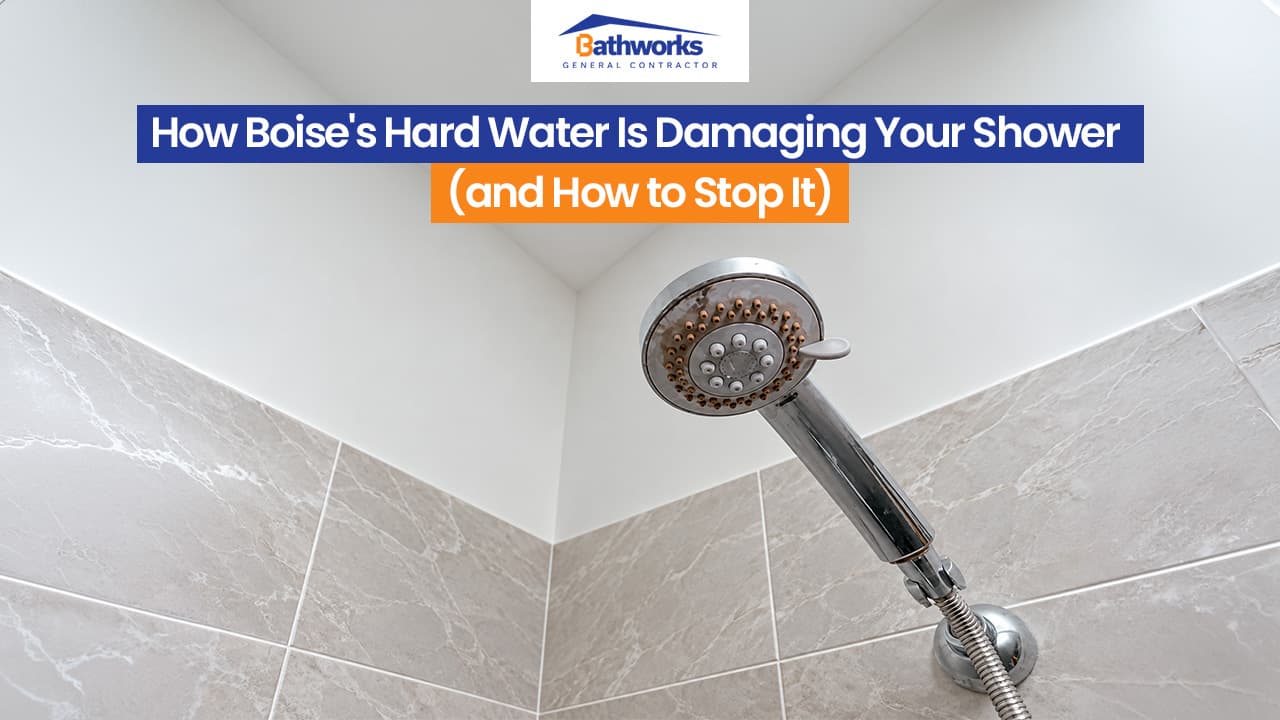
- On showerheads: mineral scale clogs the small nozzle openings, reducing water pressure and spray pattern over time.
- On acrylic and fiberglass: scale builds into fine surface scratches, which trap even more residue and make the surface progressively harder to clean.
Signs your shower already has hard water damage
- A white or cloudy film on glass that doesn't wipe off with normal cleaning.
- Grout that looks discolored or feels gritty or crumbly, even right after cleaning.
- Fixtures with a visible white or green crust around the base or spout.
- Noticeably weaker water pressure from the showerhead compared to when it was new.
- Soap that feels like it “won't rinse off” even after a full shower.
Three approaches, ranked by how completely they solve the problem
1. Daily habits (cheapest, addresses symptoms only)
Squeegeeing glass and walls after every shower and using a non-abrasive, pH-balanced cleaner weekly meaningfully slows new buildup. It won't reverse etching that's already happened, but it buys real time on fixtures and glass that are still in decent shape.
2. A whole-home water softener (addresses the root cause)
A softener removes the calcium and magnesium from your water supply before it ever reaches a fixture, which stops new scale formation throughout the entire home, not just the shower. It's the most complete fix, but it's a separate plumbing system from the shower itself and represents its own investment and ongoing maintenance (salt refills, etc.).
3. Upgrading to a more resistant material (fixes a shower that's already damaged)
If grout is already crumbling, an acrylic surround is already cracked, or fixtures are already pitted, cleaning and softening won't undo existing damage. At that point, replacing the surface is the realistic option, and the material chosen matters. Non-porous solid-surface materials like Onyx cultured stone have no grout to erode and resist staining better than tile or acrylic, though no shower material is entirely immune to hard water; glass and metal fixtures still need regular care regardless of what's on the walls.
The most complete fix combines two of these
A water softener addresses the water itself throughout your home. A more resistant shower material addresses the surface that's most exposed to it daily. Homeowners dealing with a shower that's already failing often pair a remodel with adding or upgrading a softener, solving both the symptom and the cause at the same time, rather than replacing a shower only to watch the same damage start over.
Dealing with a shower that hard water has already won against? Get a free consultation and we'll show you materials built to hold up better.
Frequently asked questions
Will installing a water softener fix a shower that's already damaged?
A softener stops new damage from forming, but it won't reverse etching in glass or discoloration already embedded in grout. For an already-damaged shower, a softener is best paired with resurfacing or replacing the affected material.
Can hard water actually crack tile or grout?
Hard water itself doesn't crack tile directly, but mineral buildup breaks down grout's seal over time. Once water gets behind tile through failed grout, that moisture can cause much more serious damage to the wall structure behind it.
Does cultured stone resist hard water better than tile?
Generally, yes. Because it's non-porous and has far fewer seams than a tiled wall, there's less surface area and no porous grout for minerals to embed into.
How often should I clean glass shower doors in a hard water area like Boise?
A quick squeegee after every use is the single most effective habit. A deeper clean with a non-abrasive glass cleaner weekly helps prevent the kind of buildup that eventually becomes permanent etching.