7 Signs It's Time to Remodel Your Bathroom (Not Just Patch It)
Soft flooring, stubborn grout stains, a failing shower surround, and other signs that another patch may only delay a bigger bathroom repair.

Quick answer: The clearest signs it's time for a remodel rather than another patch job are: soft or spongy flooring near the tub, grout and caulk that stay dirty no matter how much you clean, a cracking or flexing tub/shower surround, ceiling stains below the bathroom, persistent mold or musty odor, difficulty getting in and out of the tub safely, and a dated look that's actively hurting your home's resale value. If you're nodding at two or more of these, patching is likely just delaying a bigger repair.
1. The flooring near your tub or shower feels soft or spongy
Step around the base of your tub or shower. If the floor gives even slightly, that's usually water damage to the subfloor underneath, not the flooring itself. This almost never gets better on its own, and it's one of the few signs on this list that's genuinely urgent: the longer water sits in wood subflooring, the more structural repair is eventually needed.
2. Grout and caulk look dirty no matter how much you scrub
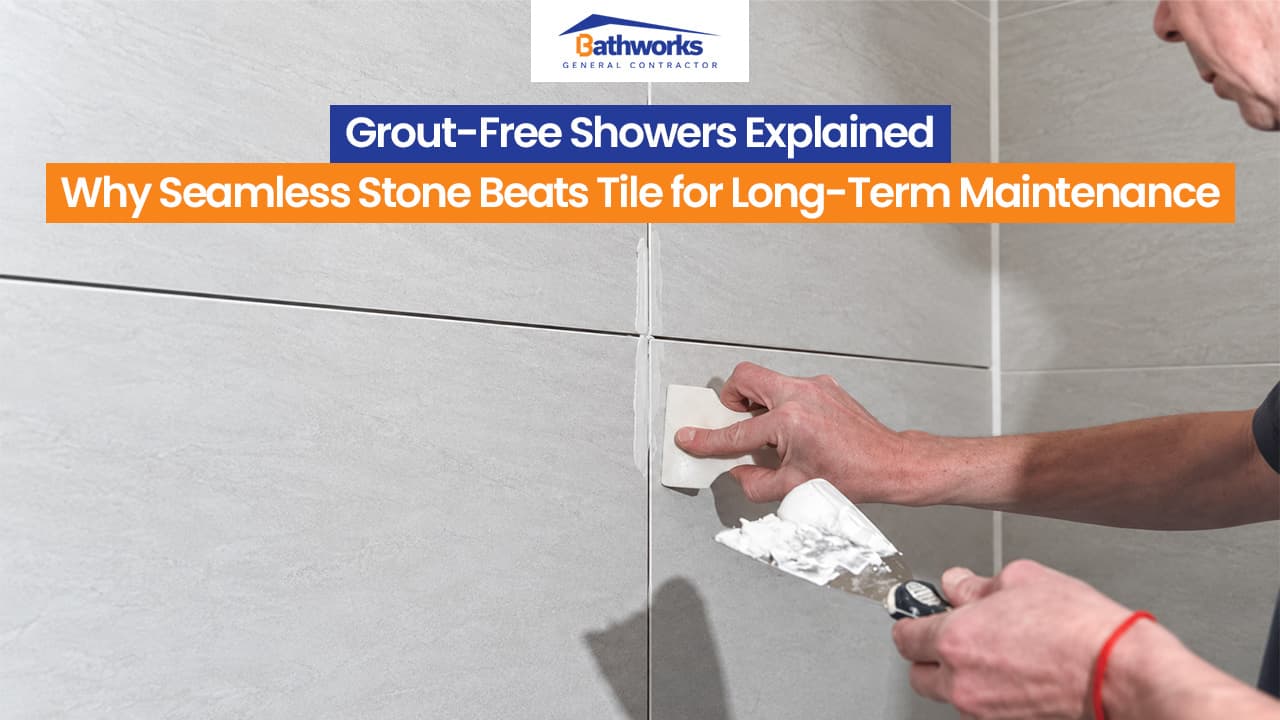
If you've tried every cleaner and a stiff brush and the grout lines still look gray or stained, that's not a cleaning problem anymore, it's the grout itself breaking down. Porous grout absorbs moisture and minerals over years (especially with Boise's hard water) and eventually no amount of scrubbing restores it. At that point, regrouting or replacing the surface entirely is the only real fix.
3. Your tub or shower surround is cracking, chalking, or flexes when you step in
Acrylic and fiberglass surrounds are common in Treasure Valley homes built from the 1980s through 2000s, and they have a real lifespan. Hairline cracks, a chalky faded finish, or a surround that visibly flexes underfoot are all signs the material is failing structurally, not just cosmetically. A cracked shower pan in particular can let water behind the wall without any obvious sign on the surface.
4. You avoid using the tub because getting in and out feels risky
This one's easy to normalize, plenty of people quietly stop using a tub rather than deal with the awkward, high step-over. If that describes your household, the tub has effectively already stopped functioning as a tub. It's worth treating that as the signal it is, especially before it leads to an actual fall.
5. There are water stains on the ceiling below the bathroom
If you have a two-story home and notice discoloration on the ceiling below a bathroom, that's a leak, and it's coming from somewhere: a failed shower pan, a loose supply line, or a slow leak around the tub surround. This is the highest-urgency item on this list. Ceiling stains mean water has already traveled through a floor, which means it's had time to affect framing and insulation along the way.
6. There's a musty smell or visible mold you can't get rid of
A persistent musty odor, or visible dark spots in grout lines, caulk, or corners that keep coming back after cleaning, usually means moisture is getting trapped somewhere it shouldn't, behind a wall, under flooring, or inside a wall cavity. Surface cleaning treats the symptom, not the source.
7. It just looks dated, and it's affecting how you feel about your home
Not every sign on this list is a structural emergency, this one is purely about quality of life and resale. A bathroom that still has original fixtures from a decades-old build reads as a project to a buyer and a daily annoyance to you. There's nothing wrong with remodeling purely because you're ready for something better, that's a completely valid reason on its own.
Which of these need attention right now vs. can wait
- Act now: soft flooring, ceiling stains, persistent mold. These involve active moisture damage that gets more expensive the longer it's left alone.
- Worth scheduling soon: failing grout/caulk, a cracking surround, a tub that's become hard to use safely. These aren't emergencies today, but they tend to become one eventually.
- Whenever you're ready: it just looks dated. There's no ticking clock here beyond your own patience with it.
Recognize two or more of these in your own bathroom? Get a free, no-pressure consultation and find out exactly what you're dealing with.
Frequently asked questions
Can I just repair the specific problem instead of a full remodel?
Sometimes, yes. A single failing fixture or a small grout repair can occasionally be addressed on its own. But if you're seeing water damage to the subfloor or wall structure, a proper remodel is usually more cost-effective than repeated patch repairs to a surface that's already compromised underneath.
How do I know if it's water damage or just an old, ugly bathroom?
Water damage usually comes with a physical sign beyond appearance: soft flooring, ceiling stains, a musty smell, or visible mold. A bathroom that's simply dated but structurally sound won't show those signs, it'll just look like it belongs to a different decade.
Is a cracked shower pan actually dangerous?
It's not usually a safety hazard in the moment, but it is a real risk to your home. A cracked pan can let water travel underneath the shower floor and into the subfloor or ceiling below without any visible warning until the damage is significant.
How much does it cost to fix these issues vs. remodel?
It depends heavily on scope and what's found once the old surface comes out. A free in-home consultation is the fastest way to get an honest, exact answer for your specific bathroom.